
Our spiritual guide
Our Tradition
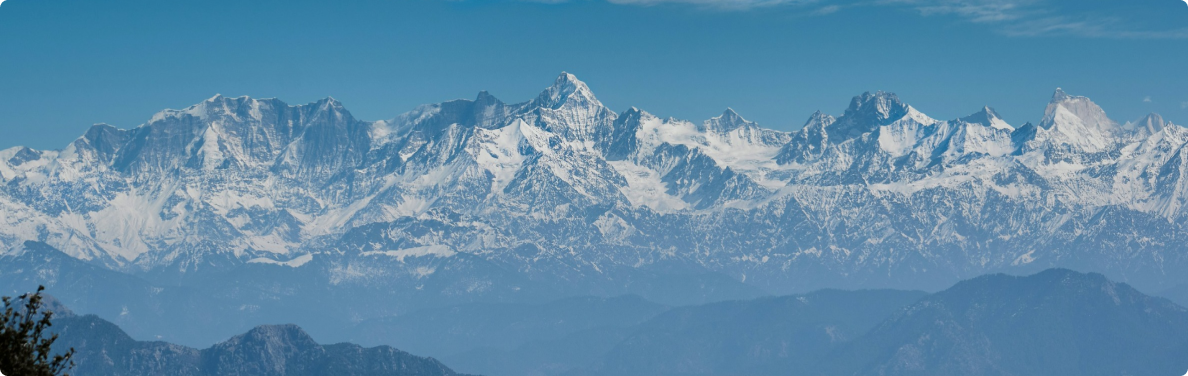
The Himalayan Mountains have been the home of sages for millennia. These great sages lived and passed on knowledge of the yogic teachings to disciples who then became masters passing on the teachings in an unbroken lineage since the Vedic period. Twelve hundred years ago Shankaracharya organized his teaching into five centers of the Himalayan Tradition. As one of those five, our tradition is the Bharati lineage connected with the Shankaracharyas at the Shringeri Seat.
The Himalayan Yoga Tradition is not a tradition where a teacher proclaims himself a guru and students are expected to believe whatever he says, rather, the teachings come from the Tradition and the student can look to the Tradition to support and make sense of what the teacher says. The initial purpose of the tradition is to awaken the divine flame within each human being and the goal is for each student to become a master of the Tradition in coming to know his or her true Self. It is the task of the teacher, through the Grace of the Guru to selflessly help his students on the way to the highest enlightenment.

Spiritual Guidance
" THE TEACHERS OF THE TRADITION ARE TAUGHT TO WORK ONLY FOR OTHERS, SO THAT SUFFERING AMONG PEOPLE MAY BE ALLEVIATED AND THEY MAY COME TO CLAIM THEIR BIRTHRIGHT: SELF-KNOWLEDGE. "
The principal tenets and practices of all known systems of meditation are included in the Himalayan Yoga Tradition and, for the most part, these systems have arisen out of it. For example: Vipassana emphasizes breath awareness and Transcendental Meditation concentrates on repetition of the mantra, whereas most Hatha practitioners pay attention mainly to posture. The Himalayan meditator, however, learns to sit in the correct posture, relax fully, practice correct breathing, and then combine breath-awareness with the mantra.
The Tradition teaches specific methods of training the human mind. It awakens the energy called Consciousness into the meaning of one's essential nature - "Thou art That" - until one's small, ego-centered personality and identification with the external are replaced by the knowledge of the Eternal Self - ever-pure, ever-wise, ever-free. The methods are scientific, systematic and internal, culminating in the mystery of initiation, and the direct conferring of the energy of Consciousness to disciples until they become Masters in their own right.
Himalayan Tradition booklet
Himalayan Tradition booklet
Inspiration
May the reader receive the grace of the Himalayan Tradition and aspire one day to become a vehicle for such transmission.
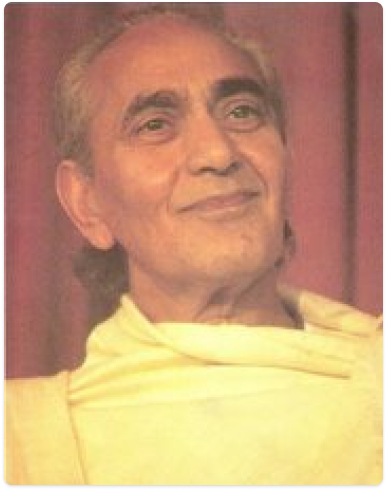
Swami Rama discussing the benefits of Internal Dialogue
"To succeed in meditation, you have to develop this important step. You do not begin with meditation itself. First you learn to set a regular meditation time, and then to have a dialogue with yourself. In this process you are coming in contact with your inner, internal states. You are learning about the subtle aspects of your mind, your own conscience - and at the same time you are also training yourself."
"Learn to counsel yourself and have a dialogue with yourself: ask yourself why you are doing an action. Many times you will say to yourself, "I don't want to do this, but I have been doing it, so now it's a routine," and then you'll understand the process of habit formation."
Internal Dialogue is one of the methods taught in our Teacher Training Program.
Be self-inspired... The great prophets and sages for Centuries have given this guidance: read something Inspiring every day!
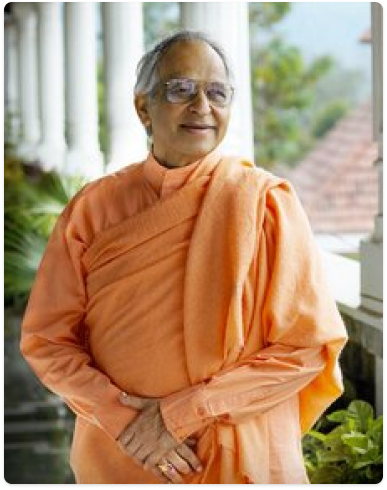
Swami Veda Bharati speaking to a class of new Yoga Teachers Why do we teach Yoga?
We teach out of compassion. We teach because the world suffers and our teaching will reduce that suffering. We teach because we have received that compassion and want to share it with others who suffer. The cause of suffering, in the Yoga-sutras, is ignorance. Our teaching reduces the level of that ignorance. The student arrives because s/he is seeking help - our desire to teach arises directly out of our compassion for the student.
Teach and Be Blessed: a paraphrased excerpt from the Diamond Sutra
H.H. Swami Rama of the Himalayas (1925-1996)
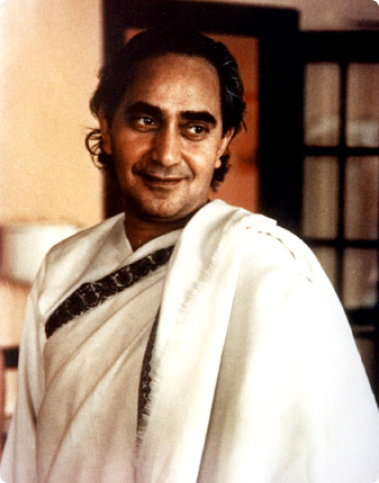
A disciple of the Himalayan adept, Sri Bengali Baba, Swami Rama (1925-1996) was born and raised in the legendary Himalayan mountain caves where countless generations of yogis have been trained and initiated into the deepest mysteries of yoga. Throughout his childhood and adolescence he lived and travelled with many saints and yogis. At the young age of 24 years he succeeded the great spiritual leader Dr. Kurtkoti as Shankaracharya of Karvirpitham.
He renounced the dignity and prestige of this high office to return to the Himalayas to intensify his meditative practices. After completing an intense, eleven-month meditation practice in isolation, he emerged with the determination to serve humanity, particularly to bring the teachings of the East to the West, and directed his life toward the unification of science and spirituality. He began his synthesis of eastern and western traditions with his research work at the Menninger Foundation in the United States and helped to revolutionize scientific thinking about the relationship between body and mind.
He founded the Himalayan International Institute of Yoga Science and Philosophy with branches throughout the world, and the Himalayan Institute Hospital Trust, a 350 million dollar health and rural development project located near Dehradun in Garhwal, designed to serve this region’s population of millions of people in great medical, economic and social need. From a small outpatient clinic started in 1989, the Trust has grown into a huge medical city that incorporates an ultra modern SOD-bed hospital, medical college, school of nursing, Rural Development Institute and holistic centre.
Through his life and teachings, Swami Rama sought to combine the ancient teachings of the East with modern approaches of the West. He was a great yogi, scientist, philosopher, humanitarian, and mystic poet, all rolled into one. Having reached the heights of spiritual enlightenment, he always strove with seemingly endless energy to attain perfection in his actions in the external world. His life and teachings are the inspiration behind AHYMSIN and Swami Rama Sadhaka Grama (SRSG).
Swami Veda Bharati
Swami Veda Bharati is the founder and Spiritual Guide of both the world-wide organization, Association of Himalayan Yoga Meditation Societies International (AHYMSIN) and the Swami Rama Sadhaka Grama in Rishikesh, India. He is also the Spiritual Guide of Sadhana Mandir Ashram, his master's ashram in Rishikesh and of the Himalayan Institute Hospital Trust near Dehradun, India. He was born into a Sanskrit speaking family and raised in the centuries old Sanskrit tradition. From the age of nine he has captivated audiences with the depth of his knowledge and intuition in the Vedas and Patanjali's Yoga Sutras. All of his knowledge has come intuitively through which he has attained the highest academic degrees; BA (Honours) (London), MA (London), D. Lit. (Holland), and is the author of many books.
He was initiated into one of the highest paths of meditation and yoga by his master, the celebrated yogi Swami Rama of the Himalayas.
His immense experience and scholarship enable him to lecture on a wide variety of topics. He is able to conduct meditation in seventeen languages. His ability to guide his audiences to calm states and meditative stillness is well known to his students in the various centers he has established all over the world.
Swami Veda Bharati combines the best of the ancient and the modern. He is an inspired and loving teacher, a prolific author, poet and an international lecturer.
With his unique personality he radiates peace, divine love and joy wherever he is. He was honoured by the Swamis of India who conferred on him the title of Mahamandaleswara, placing him among the top 30 or so Swamis of India. The only title above Mahamandaleshwara is that of Shankaracharya, a title that was bestowed on his master the Honorable Shri Swami Rama of the Himalayas.
Swami Ritavan Bharati
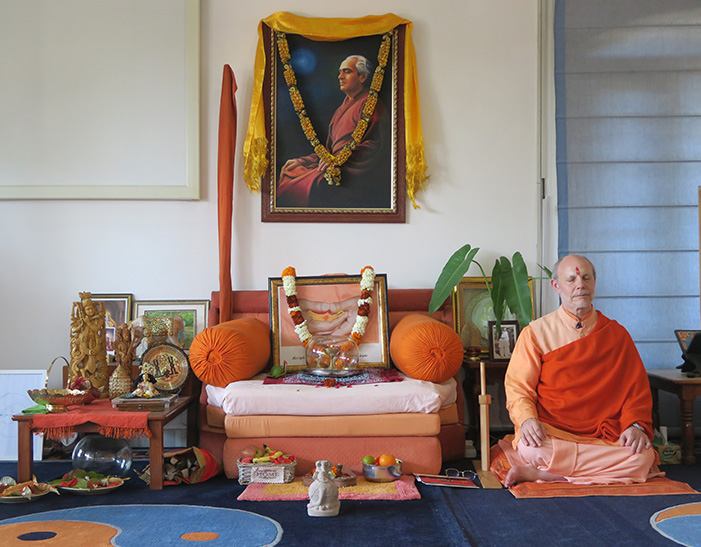
Present Ashram Pramukha and Spiritual Guide
Swami Ritavan Bharati has lived a life dedicated to serving Swami Rama and Swami Veda Bharati since 1970. After having been initiated at the age of 20, he transited through all the three Ashrams of Vedic life (Brahmacharya, Grihastha, and Vanaprastha) under the direct guidance of Swami Rama and Swami Veda Bharati. He was then initiated into Sanyasa in 2007.
He holds master’s degrees in Management, Education, Holistic Philosophy, and Eastern Studies. A highly experienced yoga meditation practitioner, he has conducted and guided numerous silence and meditation retreats throughout the world and has been instrumental in guiding the international Himalayan Yoga Tradition – Teacher Training Program (HYT-TTP). He is also a Mantra Initiator within the Tradition of the Himalayan Masters. Swami Veda Bharati chose Swami Ritavan Bharati as his successor; as the Ashram Pramukha and Spiritual Guide of SRSG and the AHYMSIN community, before he took Mahasamadhi in 2015.
A man of few words, his primary focus is on the inner life.